spaces for healing, learning, and transformation.
Spaces for shared healing, reflection, and intra-team support.
A creative recovery process built on art, truth, and transformation.
Transforming shame into self-compassion and responsibility.
Community culture meets data for justice and collective change.
Spaces for reckoning, reflection, and responsibility.
Our support groups are safe, confidential spaces for remorseful individuals to explore the harm they’ve caused — and begin the journey of accountability. We don’t center blame or shame. We center willingness. These sessions are for people who want to unlearn, relearn, and show up differently.
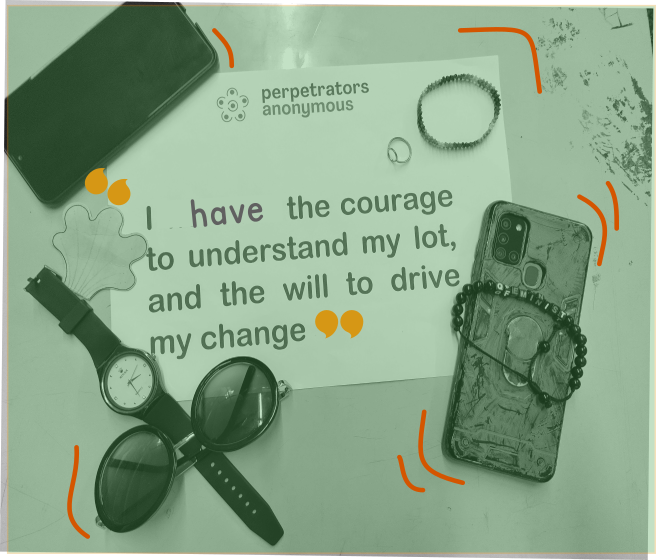
Together, we unpack how harm takes shape:
These sessions are deeply engaging, layered, and personal. They help participants explore how we can be both survivors and perpetrators — and what it means to heal without denial or erasure. These aren't PR-friendly activities — they're the work of building trust from the inside out.

Art opens doors that fear tries to close.
Pandora’s Box is where we dig deep. Really deep. It’s our creative recovery program, built on the belief that healing requires honesty — and honesty sometimes needs art to make it through the door.
We use creative tools like:
We’re not afraid of the tension. We know real transformation lives inside discomfort. We've seen what happens when taboo is met with curiosity, and when people are trusted to face themselves without being abandoned.
You can’t heal what shame won’t let you touch.
This is one of our most intimate offerings — a 6-week course that gently unpacks shame and guilt as two of the biggest blocks to accountability.
In systems built to punish and exile, even admitting harm feels dangerous. That’s where the Shame Whisperer begins.
Data is not the opposite of care — it’s an extension of it.
Love & Fear is our way of listening to what communities are already saying. It’s a dual-purpose program focused on two things:
We don’t extract. We don’t assume. Everyone involved knows how their data is being used — and why. Our data is a mirror, not a microscope.